
The Technology!
In the middle of 1913 when a new, shiny, Ford Model T emerged, completed off an assembly line, a new chapter in the history of manufacturing dawned. Prior to that, cars were manufactured by a laborious, time consuming process with workers putting together nearly a hundred different components one by one. The introduction of the mobile assembly line with parts being fit by machines as the structure rolled along, reduced the construction time of each car from more than 12 hours to merely around 2.5.
Thus, a new era began and industries would never look back after that. With time, automation simplified and streamlined complex tasks around the world, with Japan, several European nations and others leading the way from the mid 20th century. With devastating wars reducing entire cities to rubble, it was automation which helped many a nation get back on their feet quickly and achieve rapid industrialisation. As the 21st century arrived, it brought a range of new technological advancements that enabled automation to conquer new frontiers of efficiency.
Manufacturing automation can be studied as a great example of hardware and software operating in sync to change the world for the better. Across manufacturing companies worldwide, research is always in motion to determine how the hardware could be made better as well as smarter so they can take on more varied tasks. After all, Graetz and Michaels established in 2015, based on their study of the impact of automation across 14 industries in more than 17 countries for over a decade, that the average GDP growth rates of such nations increased by 0.37 percentage points and productivity growth rates by 0.36 percentage points respectively. These numbers translate to a 12% total GDP growth and 18% labour productivity growth for the countries researched over said decade.
Mckinsey’s research adds more weight to ongoing research with their projection of 0.8 to 1.4 percent productivity growth annually across industries, globally. Therefore, it’s vital that enterprises in the manufacturing sector get up to speed with automation tools and tech to stay relevant in the decade to come.
So which technologies are extending the capabilities of automation the most? Let’s take a look:
• Artificial Intelligence: AI has, over the years, played an increasingly vital role in automation and led us to such advancements as self-driving cars and automatic checkouts at stores. True to its name, it serves as the brain of the hardware components, continuously learning, evolving and directing their journey into newer avenues. Notable names such as Harley Davidson has successfully used AI and Robotics to increase sales leads by a whopping 2,930%. Among other things, AI powered robots are increasingly being used as head hunters for recruitment in fraud prevention.
• Internet of Things (IoT): Manufacturing is all about intelligent machines making more intelligent machines, and a big part of that intelligence is driven by the IoT which empowers appliances, gadgets, vehicles and more to diagnose themselves, generate reports, study user behavior and adapt themselves to provide better experiences. At [x]cube LABS, we have helped organisations augment their products with smart capabilities which have then provided organisations with valuable data at every stage of the automation process, helping them improve processes, build better and reduce operational expenses.
• Cloud: Robotics have benefitted immensely from cloud computing and other services which have increased coordination and efficiency by a huge margin. Cloud robotics, as the branch is known, is flourishing, and its many aspects such as environment navigation, computer vision and fleet management, has made owning, coding and managing robots extremely efficient. Such services, which make robot development lifecycle simpler, are crucial for the success of small and mid-size businesses.
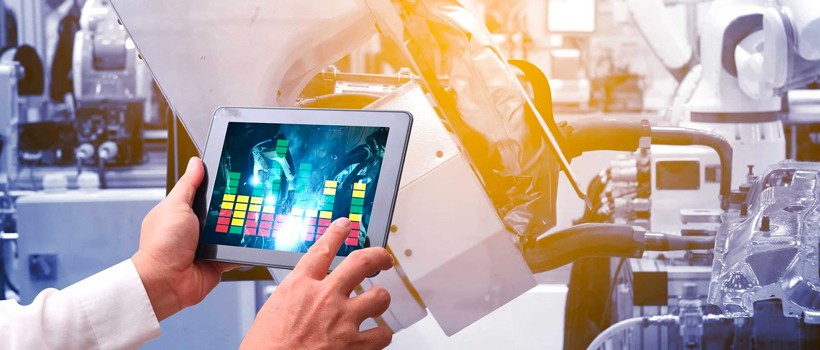
• Mobility: As robots increase in number and boost manufacturing speed, their ease of use gets increasingly better with mobile applications. With apps equipped to monitor, control and customise their every move, robots can be remotely managed and assigned tasks. Additionally, the data they generate can be accessed, filtered and analysed. The connected mobile apps also take care of basic troubleshooting and repair requests.