Category: Uncategorized

3D printing: Trends in manufacturing.

Additive manufacturing industry is growing, with multiple forecasts showing exponential increases in both spending on 3D printing and usage. The Wohlers Report 2019predicts that by 2020 all additive manufacturing products and services worldwide will be at $15.8 billion. The company expects following revenue forecasts to climb to $23.9 billion in 2022, and $35.6 billion in 2024

The world has seen many intriguing manufacturing technologies so far, but 3D printing has really caught everyone’s attention over the past few years. Not only does it have the potential to create something through an entirely unique process, but it also has the capability to render some production lines useless.

If the global engineering and manufacturing community plans to keep unlocking the full potential of industrial 3D printing, together they will have to keep rethinking the fundamentals of design engineering and digital factories of the future.

We are surrounded by 3D printing every day, and most of us have no idea. Your neighbor can walk past you with a custom 3D-printed knee replacement. The cab you take to work may have 3D-printed pulley mechanisms powering your trip. The planes we board might have a 3D-printed fuel nozzle powering the flightThe evolution of this technology is now helping power the world of manufacturing, creating new jobs, and increasing innovation across the globe. It promotes sustainability, efficiency and innovation.

In order to maximize and understand the freedom that 3D printing allows when utilizing new materials, industrial designers, mechanical engineers, and material scientists must work in harmony from the beginning to understand new material properties.

It can be extremely intimidating for companies to rethink and rebuild their workflows and processes as it relates to engineering and manufacturing. More and more, companies are ready to embrace these new workflows, but need advanced technologies to guide and automate the process to ensure successful adoption. The relentless pace of innovation within the industry is in need of responsive technology.
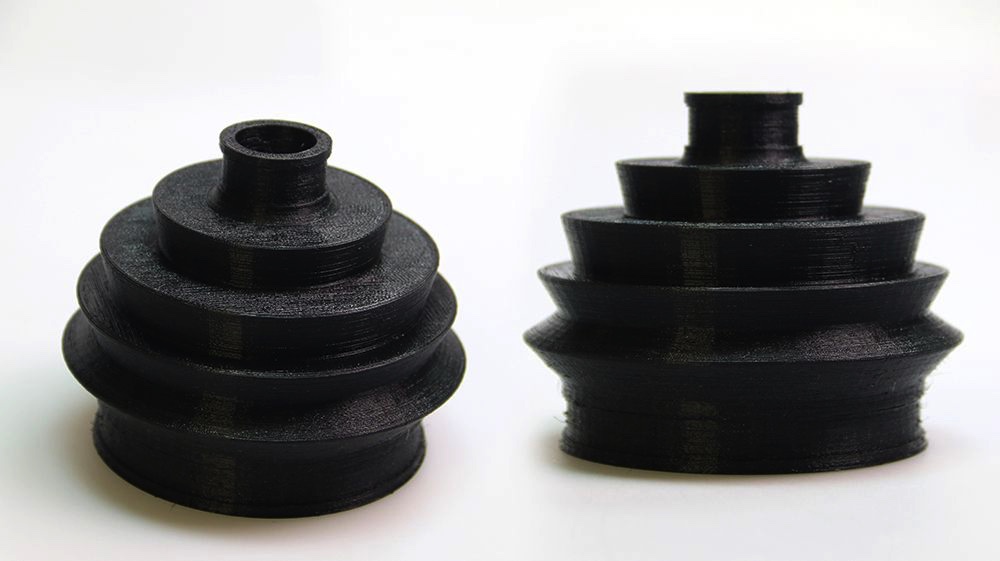
Currently, the main users of 3D printing are aerospace, the automative and healthcare, but industrial and consumer product industries also finding new ways to use 3D printing. Some notes of using 3d printing you can find on Mecofon.

Moving forward it will be not only new technology and materials that drive the 3D printing market, but also standardization and the digital thread.

Standards and Inspection

Aerospace, automotive, and medical are highly regulated industries. For 3D printing to really take off in these areas, in addition to others, engineers need a way to verify quality. A complete digital thread of everything from feedstock materials, equipment and process parameters per parts, to delivery might be necessary to ensure parts meet standards and regulations.

Obtaining repeatable results can be difficult. An entire industry will have various powder providers and building parts with different machines, all which can yield different results. In fact, even if you have the same powder and machine you could still see different results.  
Materials

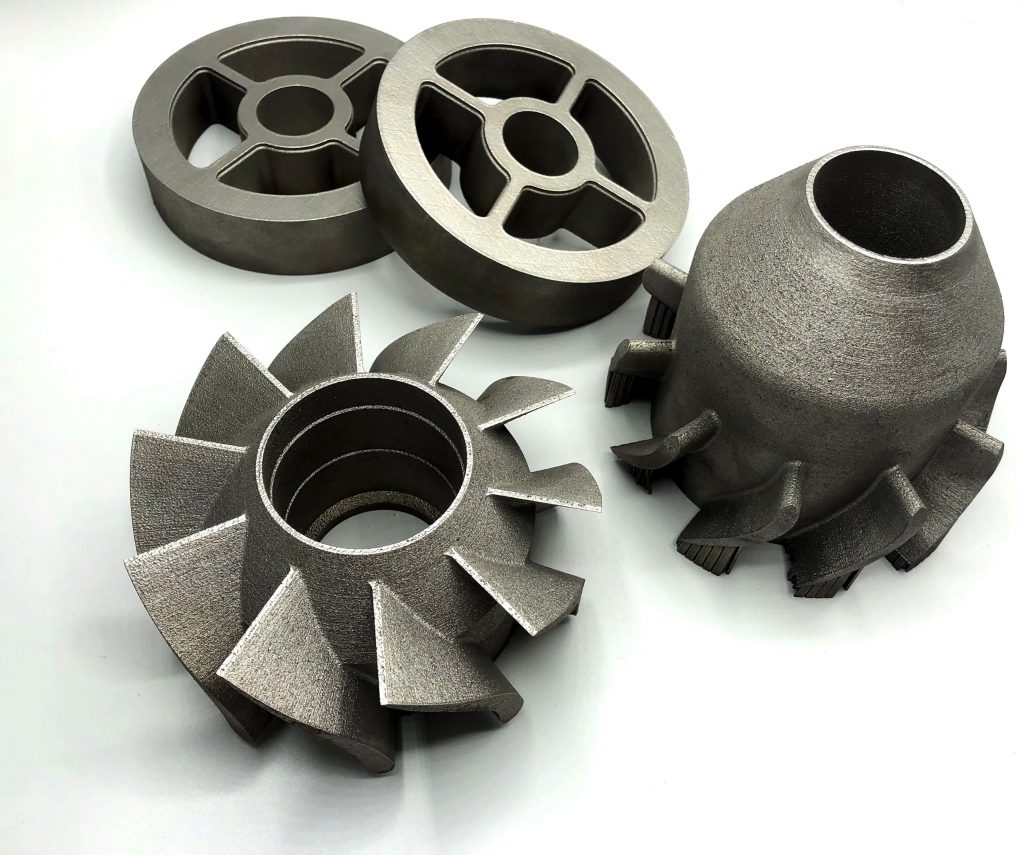
Speeding up the process while reducing cost is grabbing headlines and will continue to do so as we move further into 2020. While plastic printing can offer multiple cost-effective options, Metal 3D printing has taken more time to find a way to reduce the barrier to entry. Metal Jet printers  look like they might change the way we think about metal printing, but there are limitations. Binder jet-made parts are not be as strong as parts made in other processes. But there are many low and non-load-bearing parts to be optimized, and so the binder jet process has gotten attention in the industry. As engineers become more comfortable with 3D printing, we might continue to find more solutions with this process.

Materials are one of the top concerns for the future growth of 3d printing. More specifically, everyone looks forward to seeing more materials introduced and having systems that are more versatile, as new materials ranked second in what growth factors are most interesting to business, according to Sculpteo.

New materials are providing OEMs with stronger or more flexible polymers, and companies are experimenting.

Technologies

Materials are helping to progress 3D printing, but there are some new technologies that I think will provide more than just an incremental jump forward for the process.

While the continuous liquid interface production (CLIP) was developed years ago, it is seeing success in the automotive industry. This type of technology is going to move 3D printing forward, and it looks like the liquid polymer vat curing processes might be adding more innovation to its arsenal.

3D printing has long passed the point of being viewed only as a prototyping solution.  

Everyday, companies are finding new ways to incorporate the technology into their production, with applications ranging from tooling to spare/replacement parts and some end-use components. 

From automotive to consumer goods, companies across industries are becoming aware of the advantages 3D printing offers for production.

3D printing will not replace machining, casting or injection moulding. The true goal for the technology is to become a viable production method that can be used on par with other technologies. 

As more effort is being put into ensuring greater repeatability and speed with industrial 3D printing, we’re getting ever-closer to reaching this goal.

Using 3D printing allows companies to customize production and increase flexibility.

Here in Mekkanik we believe that every designer should be able to develop products without being limited by technology or material availability.

Expertise throughout the entire 3D printing process with Mekkanik. 

  • Co-Creation:

Join forces with our experts to develop products that make the most of 3D printing.

  • Design & Engineering

Involve our engineers during your design phase to build what is specifically for 3D printing.

  • Rapid prototyping

Get true design verification that matches reality, with prototypes within days.
The Technology!

In the middle of 1913 when a new, shiny, Ford Model T emerged, completed off an assembly line, a new chapter in the history of manufacturing dawned. Prior to that, cars were manufactured by a laborious, time consuming process with workers putting together nearly a hundred different components one by one. The introduction of the mobile assembly line with parts being fit by machines as the structure rolled along, reduced the construction time of each car from more than 12 hours to merely around 2.5.
Thus, a new era began and industries would never look back after that. With time, automation simplified and streamlined complex tasks around the world, with Japan, several European nations and others leading the way from the mid 20th century. With devastating wars reducing entire cities to rubble, it was automation which helped many a nation get back on their feet quickly and achieve rapid industrialisation. As the 21st century arrived, it brought a range of new technological advancements that enabled automation to conquer new frontiers of efficiency.
Manufacturing automation can be studied as a great example of hardware and software operating in sync to change the world for the better. Across manufacturing companies worldwide, research is always in motion to determine how the hardware could be made better as well as smarter so they can take on more varied tasks. After all, Graetz and Michaels established in 2015, based on their study of the impact of automation across 14 industries in more than 17 countries for over a decade, that the average GDP growth rates of such nations increased by 0.37 percentage points and productivity growth rates by 0.36 percentage points respectively. These numbers translate to a 12% total GDP growth and 18% labour productivity growth for the countries researched over said decade.
Mckinsey’s research adds more weight to ongoing research with their projection of 0.8 to 1.4 percent productivity growth annually across industries, globally. Therefore, it’s vital that enterprises in the manufacturing sector get up to speed with automation tools and tech to stay relevant in the decade to come.
So which technologies are extending the capabilities of automation the most? Let’s take a look:
• Artificial Intelligence: AI has, over the years, played an increasingly vital role in automation and led us to such advancements as self-driving cars and automatic checkouts at stores. True to its name, it serves as the brain of the hardware components, continuously learning, evolving and directing their journey into newer avenues. Notable names such as Harley Davidson has successfully used AI and Robotics to increase sales leads by a whopping 2,930%. Among other things, AI powered robots are increasingly being used as head hunters for recruitment in fraud prevention.
• Internet of Things (IoT): Manufacturing is all about intelligent machines making more intelligent machines, and a big part of that intelligence is driven by the IoT which empowers appliances, gadgets, vehicles and more to diagnose themselves, generate reports, study user behavior and adapt themselves to provide better experiences. At [x]cube LABS, we have helped organisations augment their products with smart capabilities which have then provided organisations with valuable data at every stage of the automation process, helping them improve processes, build better and reduce operational expenses.
• Cloud: Robotics have benefitted immensely from cloud computing and other services which have increased coordination and efficiency by a huge margin. Cloud robotics, as the branch is known, is flourishing, and its many aspects such as environment navigation, computer vision and fleet management, has made owning, coding and managing robots extremely efficient. Such services, which make robot development lifecycle simpler, are crucial for the success of small and mid-size businesses.
• Mobility: As robots increase in number and boost manufacturing speed, their ease of use gets increasingly better with mobile applications. With apps equipped to monitor, control and customise their every move, robots can be remotely managed and assigned tasks. Additionally, the data they generate can be accessed, filtered and analysed. The connected mobile apps also take care of basic troubleshooting and repair requests.

Optimizing automation performance is more important than ever!

Optimizing automation performance is more important than ever, so monitoring automation processes and diagnosing problems will be increasingly in focus As our customers face increased competition – and get by with lower headcount – they are looking for every means possible to boost the efficiency of their manufacturing automation processes and decrease costs. In our experience, all customers define efficiency in their own way but there are some common interests.  The focus on equipment performance is one, with “overall equipment efficiency” (OEE) coming up in more and more discussions. The use of data to measure and report on performance is another.
In 2019, we’ll be collecting higher volumes of more kinds of data from automated production lines – and building this data collection into more projects – than ever before. The more data we have, the better analyses we can do regarding optimization.
Collecting the data is one thing. Knowing what to collect is another. Knowing how to analyze and present actionable data for shop floor management and operators comprises yet another essential skillset. We’re building sensors, software systems, and reporting devices that do this in increasingly intelligent ways.
Of course, capacity utilization and the types and number of production errors are still important, but other kinds of data are also making their mark. One key OEE metric is the number of sellable products coming off the finishing end. This can be hard to measure while the line is running but we find that consistently analyzing this metric in a structured way invariably leads to increased performance.
Another critical parameter getting more attention is line speed over time. Although there may be peaks where the line runs even faster than 100%, if the line process is unstable you might end up with an overall line speed at only 80% when measured over a longer period.
Another example of the increased drive for efficiency is the spread of video surveillance of automated production lines. Alongside dynamic performance dashboards, these video feeds are displayed on large screens on the production floor or in remote locations and recorded for later use.
Relatively low-tech and simple to use, video recording of critical spots on automated production lines is nonetheless a powerful diagnostic tool to troubleshoot problem areas and increase efficiency. Managers and operators can review video clips to determine what went wrong – and where and when it happened – adding more eyes without adding more headcount.

Turnkey deliveries are getting more comprehensive and becoming more common

We are increasingly supplying entire turnkey automation systems not just sections and components. And we expect this trend to accelerate in 2020 and beyond.

One reason for this is that competitive forces are driving customers to apply razor-sharp prioritization between must-have, core competencies and “nice-to-have” capabilities. Fewer and fewer employ their own engineering and automation resources. Increasingly, companies are outsourcing the design, production, and maintenance of automation equipment to specialist partners. Another reason is that is that many customers, continue to struggle with a lack of skilled and trained personnel, especially engineering resources, programmers and skilled labor for maintenance.

These complex turnkey systems comprise everything the customer needs to automate a production line, including:

Hardware

Software

User interfaces

Data analysis

Installation and training

Spare parts and maintenance

User interfaces are getting smarter

In 2019, we expect the trend of increasingly smart interfaces and control panels to manage and optimize automation processes to pick up even more speed.
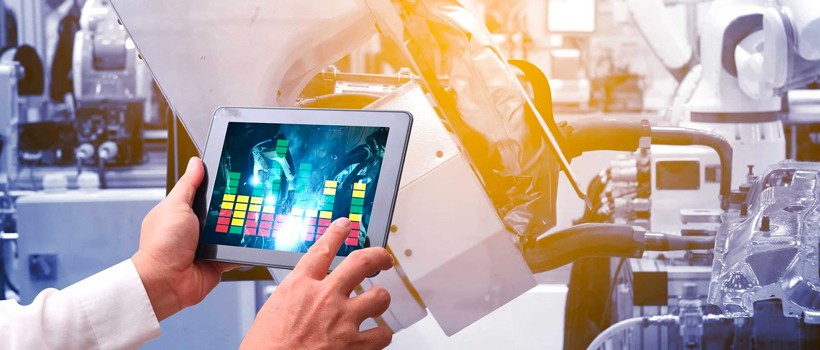
Don’t even think about complex PLC interfaces. Consider instead the simplicity and versatility of an iPad.
Why? As mentioned above, to deal with the growing skills gap. Companies are having a hard time recruiting and retaining skilled labor for increasingly automated production environments. When the old guys leave, the new guys don’t have the experience or insight to make things work. In lieu of experienced staff and more training, user interfaces must become more intuitive and easy to understand. Customers need interface solutions that capture and transfer collected experience. Operators must be able to quickly and easily do what they need to do. We will see more YouTube-like “how to” videos, “if this happens, then do that” instructions, and better visuals instead of more text.

Scroll Up